Women's Shoe Outsole Selection: A Buyer Checklist for Grip, Flex and Cost
A sourcing checklist for comparing women's shoe outsoles by grip, flexibility, weight, finish, durability, MOQ and target-market use.
The right women’s shoe outsole is selected by matching the construction, target wearer, climate, retail price and required performance—not by choosing the cheapest material. Buyers should compare grip, flexibility, weight, abrasion, appearance, bonding method, tooling and component MOQ before approving a sample. A sole that suits a loafer may be unsuitable for a high-heel sandal.
What does an outsole control?
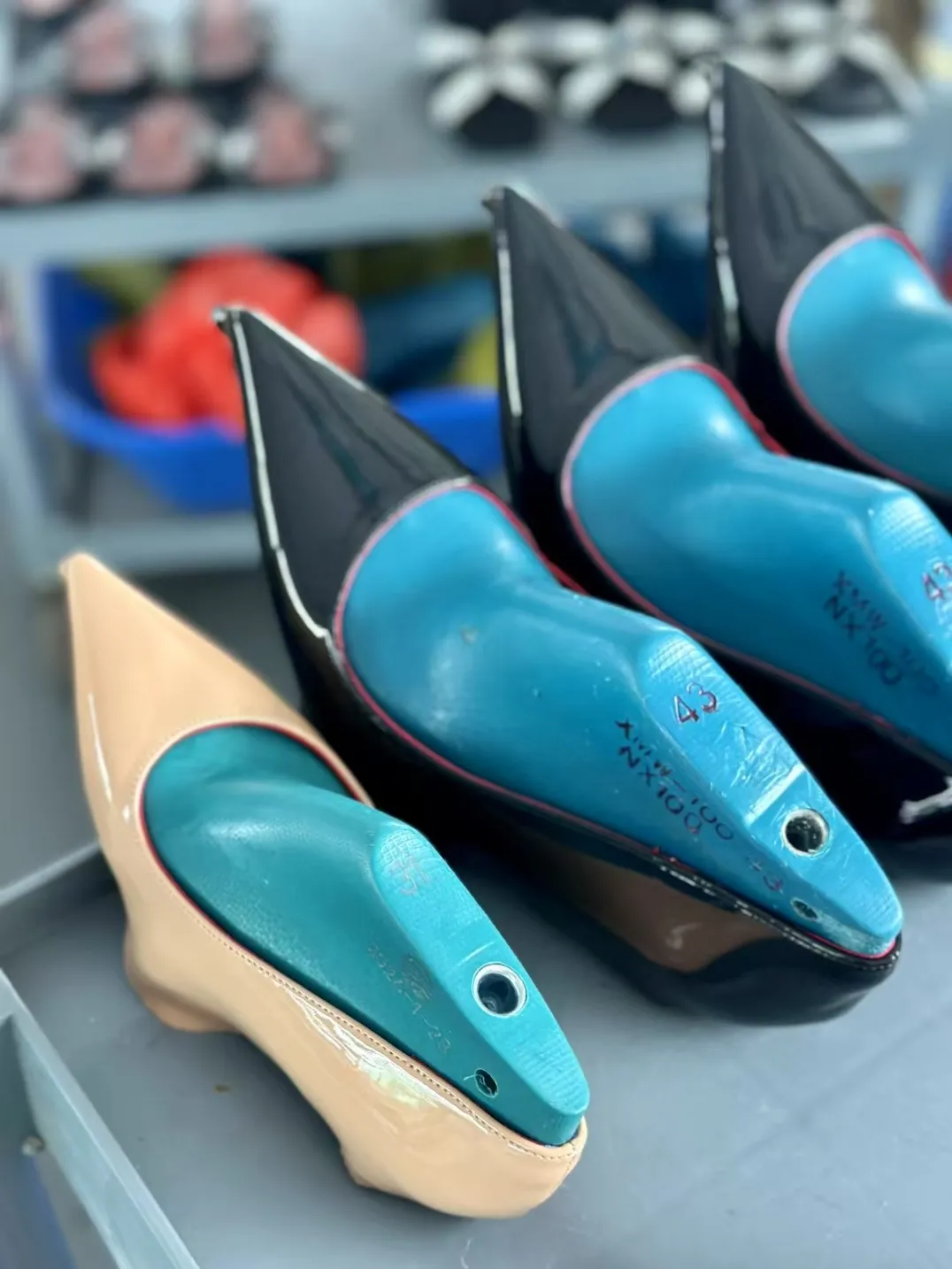
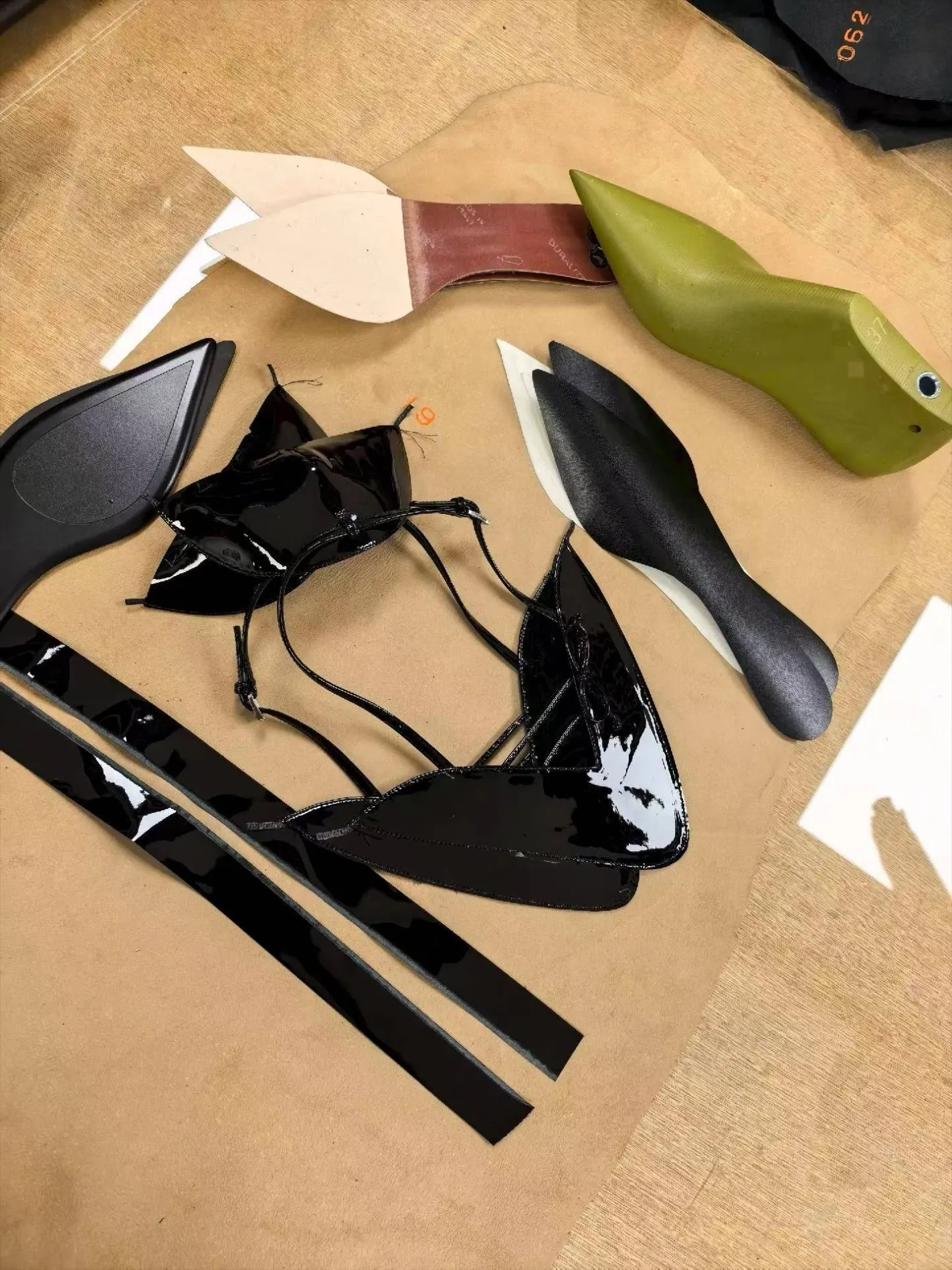
The outsole is the ground-contact component of the shoe. It affects traction, flex, weight, wear, noise, appearance and the way impact reaches the foot. It also influences production cost, mould requirements, branding options and the consistency of repeat orders.
Start with the intended use
Define where and how the shoe will be worn. An indoor occasion heel, a commuting flat and a daily loafer do not need identical performance. State the selling market, expected climate, surface conditions, wearing duration and target price before comparing materials.
Compare outsole options by measurable criteria
- Grip: review tread design and applicable slip-performance requirements for the destination market.
- Flexibility: confirm that the flex point aligns with the forefoot rather than creating resistance in the wrong location.
- Weight: compare the complete shoe, not an outsole component in isolation.
- Abrasion: consider intended frequency of wear and ground conditions.
- Hardness: check how the material affects grip, wear, noise and walking feel.
- Finish: review colour, edge quality, texture, gloss and visible mould marks.
- Bonding: confirm the preparation and construction needed for reliable attachment.
Outsole decisions for heels and high-heel sandals
High heels need stable ground contact and a compatible heel-tip system. Review forepart thickness, toe spring, shank support, heel placement and the transition between the sole and heel. A thin appearance should not come at the expense of unsuitable flex or unstable contact.
For sandals, confirm that the outsole works with the strap construction and limits forward foot slide. Test the complete shoe because grip inside the shoe and grip against the floor are separate issues.
Outsole decisions for flats and loafers
Flats need a controlled forepart flex point and enough structure to avoid excessive twisting. Loafers may need greater durability and a balance between flexibility, weight and visual substance. Review whether the sole profile supports the brand’s expected look without making the shoe unnecessarily heavy.
Stock sole or custom mould?
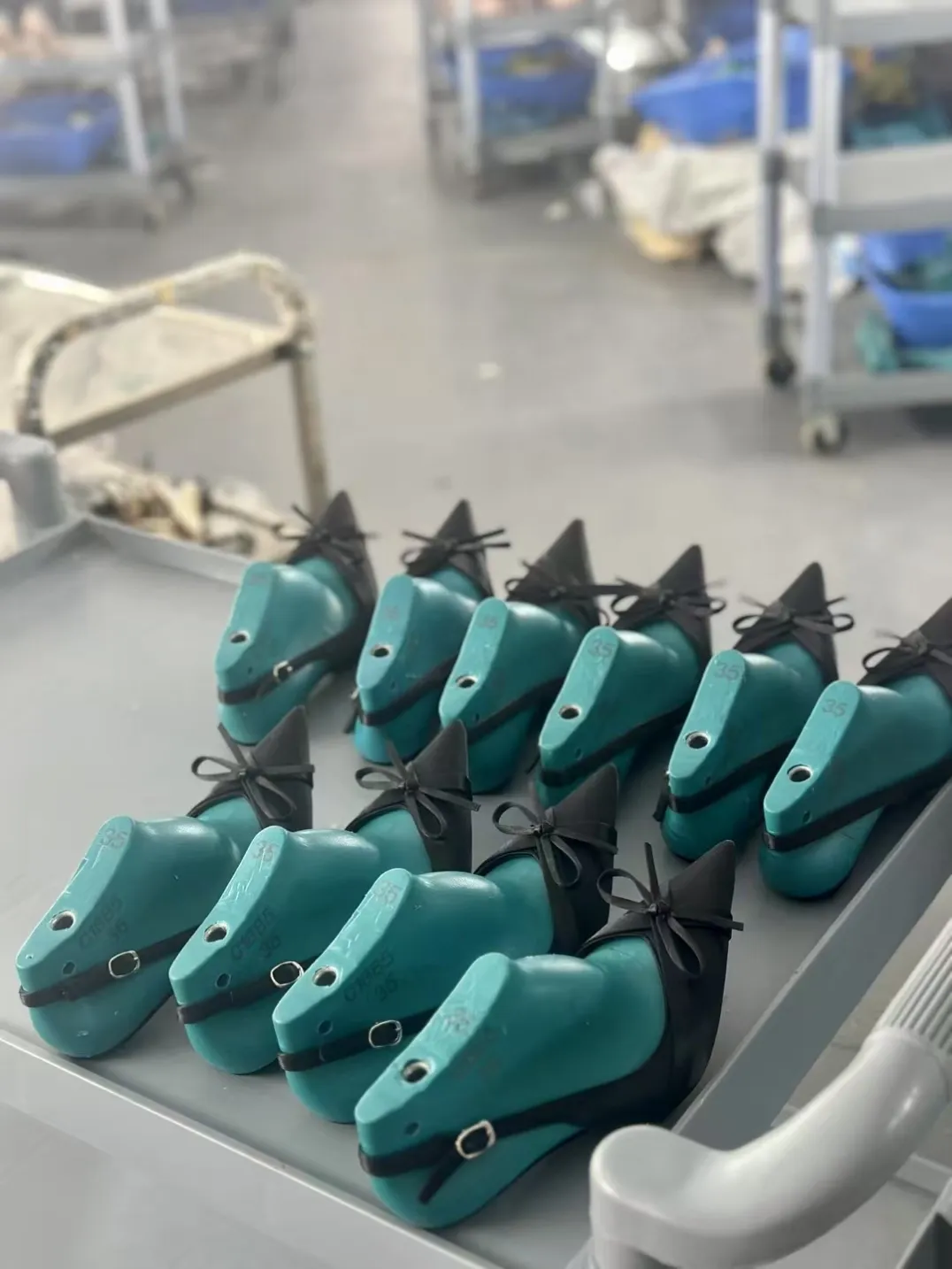
A stock sole can reduce tooling cost and development time, but available sizes, colours and minimums must be checked. A custom mould offers more control over shape and branding, yet introduces tooling, ownership, maintenance and production-volume considerations.
Before commissioning tooling, confirm who pays for it, who owns it, which sizes are included, how revisions are handled and whether the mould can be used for repeat orders.
Check component MOQ before approving the design
A low finished-shoe MOQ does not automatically mean every outsole colour or compound is available in the same quantity. Ask whether the minimum applies by material, colour, mould, size range or production batch. Align this with the overall custom-development process before finalising the collection.
Approve the outsole with the full sample
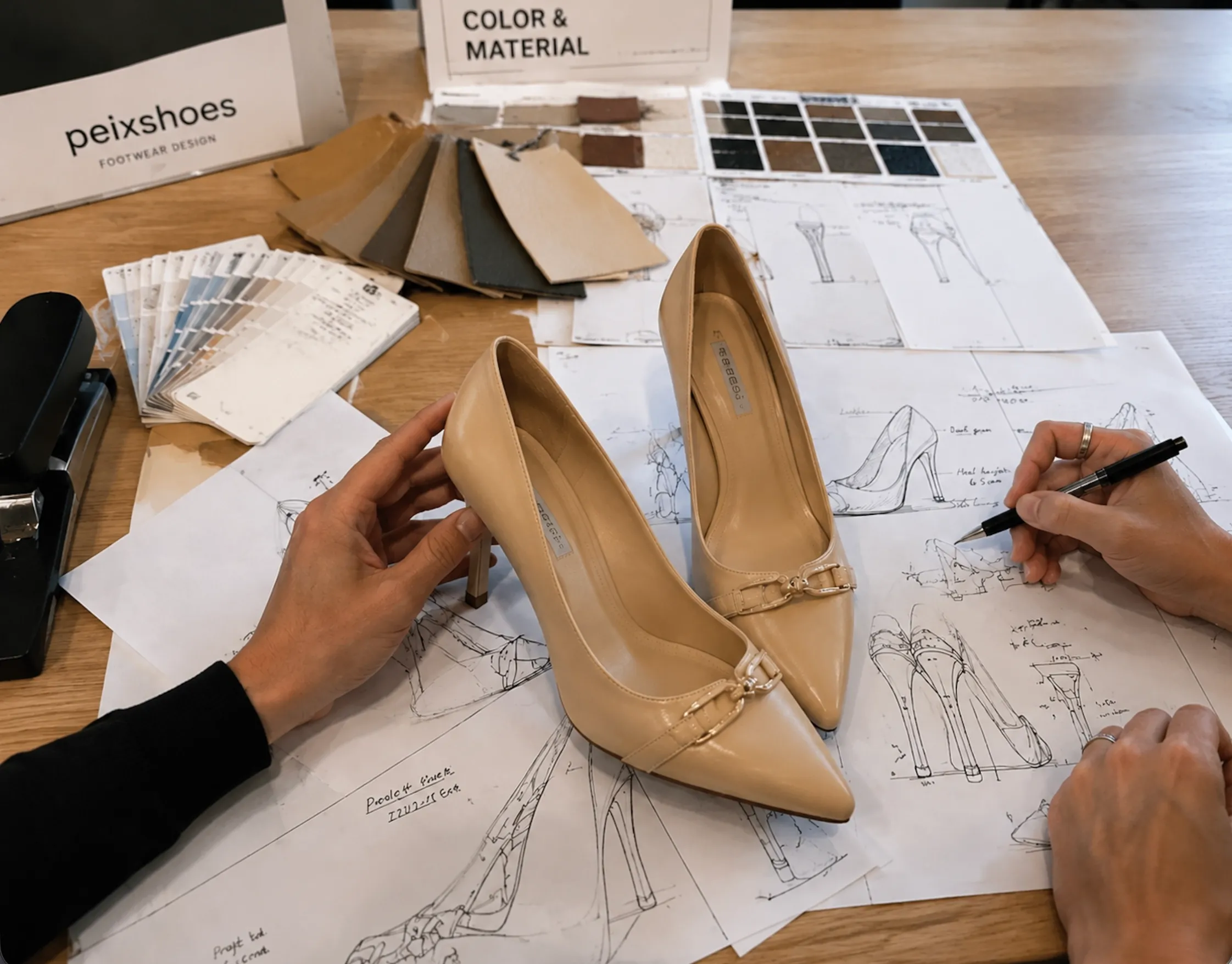
Review appearance, balance, flex, ground contact, heel stability and walking noise on the finished sample. Record the outsole reference, material, colour, hardness or other agreed specification, logo details and approved physical sample. Do not approve from a catalogue image alone.
Pre-production and inspection checklist
- approved outsole reference and colour are documented;
- size range and grading are confirmed;
- left and right soles match;
- bonding surfaces and preparation follow the approved construction;
- edges, tread and visible finish are consistent;
- heel tips and ground contact are stable where applicable;
- packing prevents deformation or surface damage.
Vera’s sourcing judgment
The most expensive outsole mistake is often made before quotation: a buyer selects a visual profile without confirming its existing size range, component minimum and fit with the intended construction. Shortlist the commercial constraints first, then compare the finished-shoe performance. Relevant women’s footwear categories can be reviewed on the products page.
Frequently asked questions
Is a softer outsole always more comfortable?
No. Comfort depends on the complete construction, including last, insole, support, flex location and outsole geometry. Excessive softness can also reduce stability.
Can one outsole be used for pumps, sandals and loafers?
Sometimes a component supports related designs, but construction, fit, balance and visual requirements must be checked for each style.
When should an outsole be reapproved?
Reapprove when the material, compound, colour, mould, heel height, construction or supplier changes, or when a repeat order shows a performance issue.
Discuss your outsole requirements
Send your reference style, target market, expected quantity and performance priorities through the Peix Shoes project inquiry form for an initial development discussion.