Women's Shoe Measurement Tolerances: A Buyer Guide for Bulk Production
How buyers can define, measure and inspect practical tolerances for women's heels, sandals, flats and loafers in bulk production.
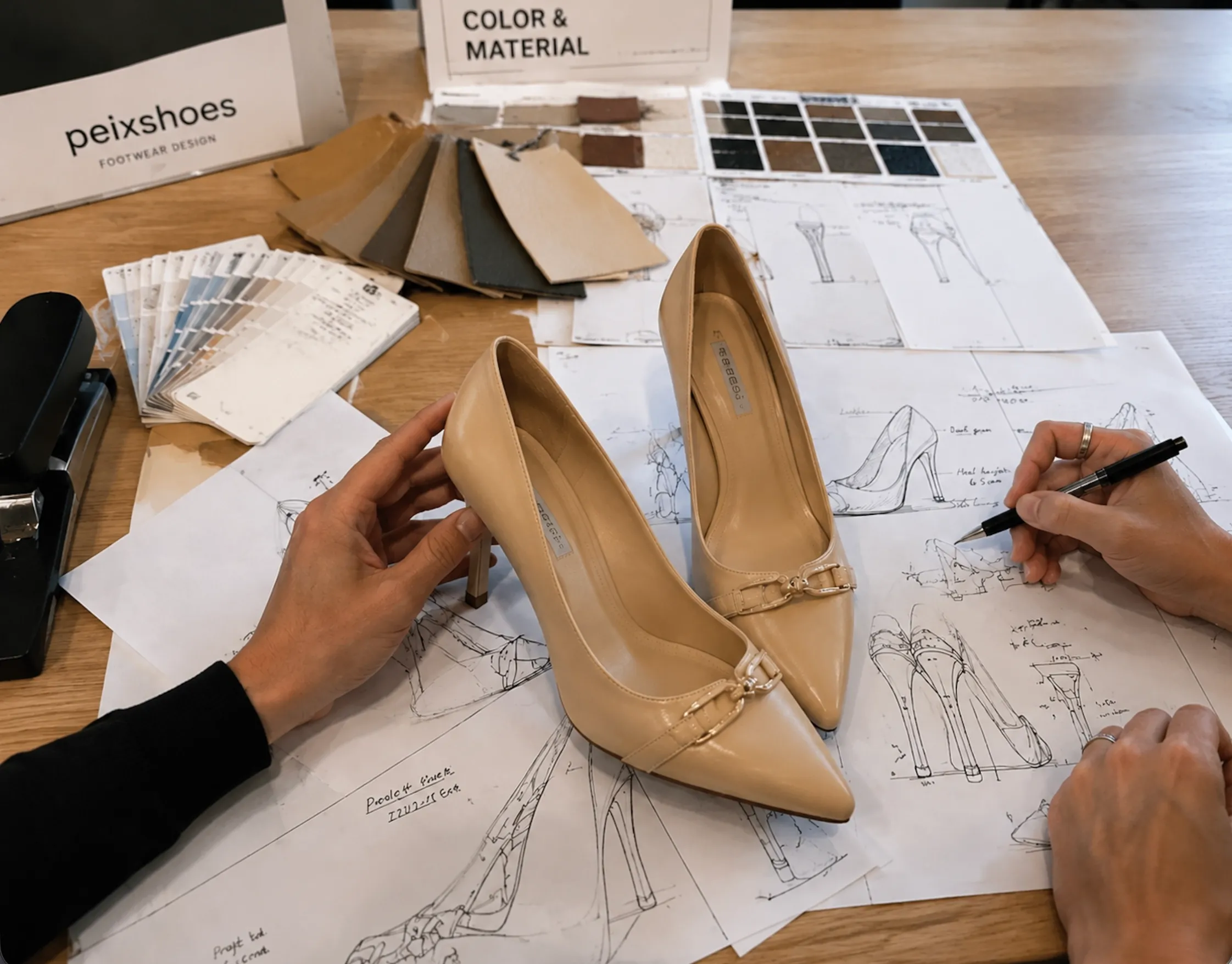
Bulk women's shoes cannot be evaluated with the words “same as sample” alone. Buyers need defined measurement methods and realistic tolerances for fit-critical points. A tolerance is an agreed acceptance range, not permission for uncontrolled variation.
Why tolerance must be product-specific
A difference that is harmless on a soft upper may materially affect a narrow pump, fixed sandal strap or loafer instep. Heel height, construction, material stretch and the measurement method all influence what can be accepted.
Do not copy a tolerance table from an unrelated shoe. Build it from the approved last, sample, materials and intended fit.
Start with the approved reference
Identify the approved sample version, size, last, material specification and date. Record the target measurement from that reference. If the sample itself is not measured consistently, it cannot control bulk production.
Define the measurement method
Two people can obtain different results when they place the tape, apply tension or compress padding differently. Every critical point should have a written method or marked photograph showing:
- start and end points;
- whether the measure is internal or external;
- tool and tape tension;
- whether the shoe is relaxed or held in position;
- how curved straps and openings are followed.
Prioritise fit-critical dimensions
Not every dimension needs the same control. Common priorities include internal length, ball girth, forepart width, instep, topline opening, strap length, hole position, heel-seat width and heel height. Select the points that influence fit, safety or visual symmetry for the specific style.
Use bilateral tolerances carefully
A plus-or-minus range may not be appropriate when one direction creates more risk. A sandal strap that is shorter may create pressure, while a longer strap may create foot movement. Record the functional consequence and decide whether the limits should be symmetrical.
Control pair difference as well as target
Both shoes can fall inside a broad tolerance while still feeling different from each other. Set expectations for left-right consistency in shape, key measurements, strap position, heel placement and appearance.
Measure several sizes and cartons
One base-size pair does not represent the order. Sample across the size range, production period and cartons. Include edge sizes when grading or fixed components create risk. Record the actual results rather than only “pass” or “fail.”
Separate measurement variation from material behaviour
Soft or elastic materials can move during measuring and wearing. Define how they are handled and consider both initial fit and expected use. If bulk material differs from the approved sample, do not assume the old tolerance remains suitable.
What to do with an out-of-tolerance result
First confirm the method and repeat the measurement. Then check additional pairs to determine whether the issue is isolated or systematic. Review fit and safety impact before deciding on rework, segregation, concession or rejection. Document the decision and affected quantity.
A practical tolerance approval checklist
- approved sample and specification identified;
- critical points selected by construction;
- measurement method illustrated;
- target and limits written by size where needed;
- left-right consistency included;
- sampling coverage agreed;
- action for nonconforming pairs defined.
Frequently asked questions
Is there one standard tolerance for all women's shoes?
No. Applicable requirements depend on construction, materials, market expectations and the agreed specification.
Can a shoe pass measurements but still fit badly?
Yes. Measurements support control, but wear testing is needed for pressure, foot slide, heel movement and balance.
Who should approve a production concession?
The authorised buyer should review the documented quantity, deviation, fit and commercial impact before accepting a deviation.
Define the control points before sampling
Send your style reference, target market, size range and fit priorities through the Peix Shoes inquiry form for an initial development discussion.