Sep 15, 2026Buying Guides
Private Label Women's Shoe Packaging: Logo, Box MOQ and Buyer Checklist
A buyer's guide to logo placement, shoe boxes, packaging MOQ, labeling, inspection and shipping readiness for private-label women's footwear.
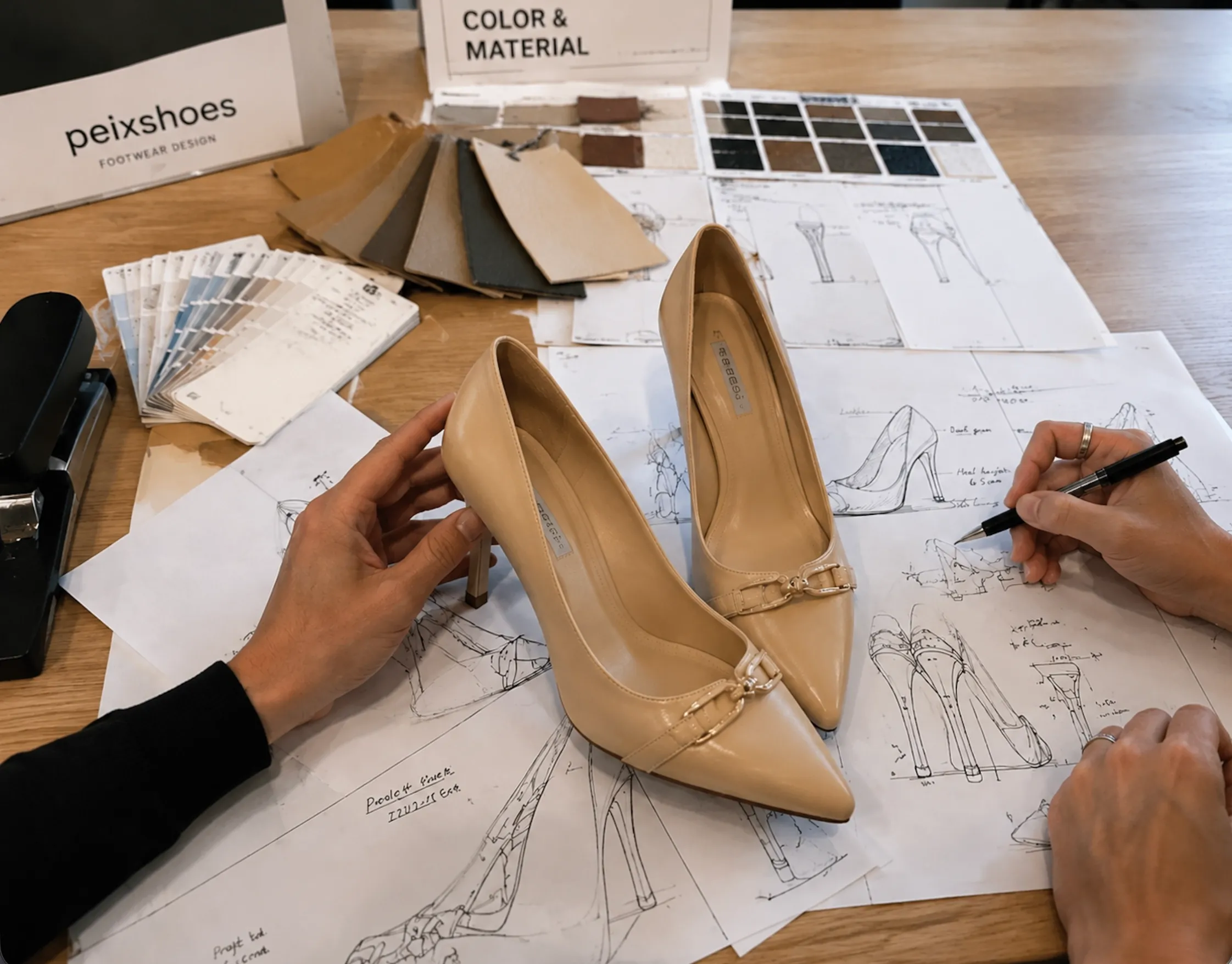
Private-label packaging is more than a box around a pair of shoes. For importers, wholesalers, retailers and emerging brands, packaging affects minimum order quantity, unit cost, product protection, labeling compliance and the customer’s first impression. A clear packaging brief also prevents late changes that can delay shipment.
This guide answers the questions buyers should settle before approving packaging for women’s heels, high-heel sandals, flats and loafers.
What does private-label shoe packaging include?
A complete packaging specification may include the logo on the insole or outsole, a branded shoe box, tissue paper, dust bags, hangtags, stickers, barcodes, size labels, care information and export carton marks. Not every program needs every item. The right specification depends on the sales channel, destination market and target price.
Start by separating essential items from optional presentation details. For example, a retailer may need barcode and size labels first, while a premium direct-to-consumer brand may place more emphasis on printed tissue, dust bags and an unboxing experience.
What is the MOQ for a custom logo, shoe box and packaging?
At Peix Shoes, the minimum for custom logo, shoe box and packaging is 160 pairs per colour. Buyers should confirm whether the quantity is counted by colour, style or total order, because packaging suppliers often calculate their own print minimums separately from footwear production.
A low footwear MOQ does not automatically mean every packaging component can be produced at the same low quantity. Printed boxes, moulded logo hardware, woven labels and special paper may each have different setup requirements. Ask for a line-by-line quotation before approving the order.
Use our women’s footwear collection page to review relevant categories: https://peixshoes.com/products
Logo placement: what should buyers specify?
Do not send only a logo file and ask the supplier to “place it on the shoe.” Confirm the exact position, dimensions, colour and application method. Common options include printed or embossed insoles, metal logo hardware, outsole moulding, debossed uppers and printed shoe boxes.
The best method depends on the material and expected wear. A print that looks sharp on a smooth insole may behave differently on a textured surface. Metal hardware adds weight and requires secure attachment. Outsole moulding may need a dedicated mould. Request a sample or artwork confirmation for the actual material before production.
Provide vector artwork whenever possible, along with Pantone or other colour references. Also state whether the logo must remain readable after normal flexing and wear.
How to brief a custom shoe box
A useful box brief includes box style, dimensions, board thickness, surface paper, print colours, logo position, finish, label position and carton packing method. The shoe construction matters: a high-heel sandal may need more internal space and protection than a flat or loafer.
Confirm whether one box size will cover the whole size run or whether several box dimensions are required. Too much empty space increases movement and shipping volume; too little space can deform straps, bows or heel shapes.
Before mass printing, approve a dieline or physical box sample. Check spelling, logo proportions, colour, barcode area and legal or market-specific labeling. A small artwork error becomes expensive when repeated across every box.
Packaging protection for heels, sandals, flats and loafers
Each category has different protection points.
High heels need stable positioning so the heel tip and upper do not rub against the box. High-heel sandals often need strap support and careful tissue placement to avoid creasing. Flats should retain their toe shape without excessive stuffing. Loafers may require tissue or inserts that support the vamp while avoiding pressure marks.
Ask how pairs will be wrapped, separated and oriented in the box. For decorative hardware, check whether protective film or tissue is needed. For light colours and delicate finishes, confirm that tissue, glue and printed materials will not transfer colour.
Retail labeling and carton marks
Buyers should provide final barcode data, product names, size conversions, country-specific information and carton marks before production. Do not rely on the supplier to guess the format used by your warehouse or retailer.
A practical approval pack should contain the box label layout, placement photo, barcode file, size chart, inner quantity, outer carton quantity, gross and net weight fields, carton dimensions and shipping marks. If labels vary by market, identify each version clearly.
Packaging inspection before shipment
Packaging should be included in the inspection checklist, not treated as a cosmetic afterthought. Buyer or third-party inspection is accepted. Inspectors can verify box construction, print colour, logo placement, barcode readability, size matching, pair orientation, protective wrapping and carton marks.
Use an approved sample and signed packaging artwork as the inspection reference. Random visual judgment is less reliable than measurable criteria.
Common packaging mistakes that increase cost
The most frequent problems are late artwork changes, missing barcode data, unconfirmed box dimensions, too many packaging variations and unrealistic assumptions about print MOQ. Another common mistake is approving the shoe sample while leaving packaging decisions until bulk production has started.
Reduce risk by locking the footwear design, size range, colour assortment and packaging brief together. If the design changes after artwork approval, recheck the box dimensions and labeling before printing.
A buyer-ready packaging checklist
Before placing a private-label women’s shoe order, confirm:
- Logo file, colour, size, position and application method.
- Packaging MOQ and any separate setup charges.
- Box structure, dimensions, materials and finish.
- Tissue, dust bag, inserts and protection requirements.
- Barcode, size label, care information and destination-market text.
- Inner packing, export carton quantity and carton marks.
- Approval method for artwork and physical samples.
- Packaging inspection criteria before shipment.
How Peix Shoes handles packaging discussions
Peix Shoes supports women’s footwear sourcing and custom development for business buyers. For custom logo, shoe box and packaging, the minimum is 160 pairs per colour. We recommend sending your target market, shoe category, quantity, size range, logo files, packaging references and target price together.
For custom development, the sample fee is US$100 and can be refunded or credited after a bulk order. A first sample takes about 10 days when the brief is complete and the design does not change repeatedly during development. Confidentiality or an NDA is available, and buyer or third-party inspection is welcome.
Review the development process at https://peixshoes.com/custom-development or send a detailed sourcing brief through https://peixshoes.com/contact-us.
Frequently asked questions
Can I order custom shoe boxes for a small private-label collection?
Yes, subject to the packaging minimum. At Peix Shoes, custom logo, shoe box and packaging start from 160 pairs per colour.
Can the logo be added to both the shoes and the box?
Yes, depending on the design, material and application method. Confirm each logo location and approve artwork or samples before bulk production.
Can a third party inspect the packaging?
Yes. Buyer or third-party inspection is accepted, and packaging criteria should be included in the inspection checklist.
What information should I send for a quotation?
Send the shoe category, reference images, target market, size range, quantity by colour, target price, logo file, packaging requirements and desired launch timeline. A complete brief produces a more useful assessment than a request for price alone.