Sep 15, 2026Buying Guides
How to Choose Materials for Private-Label Women's Heels, Flats and Loafers
Compare upper, lining, insole and outsole materials for private-label women's heels, flats and loafers before sampling.
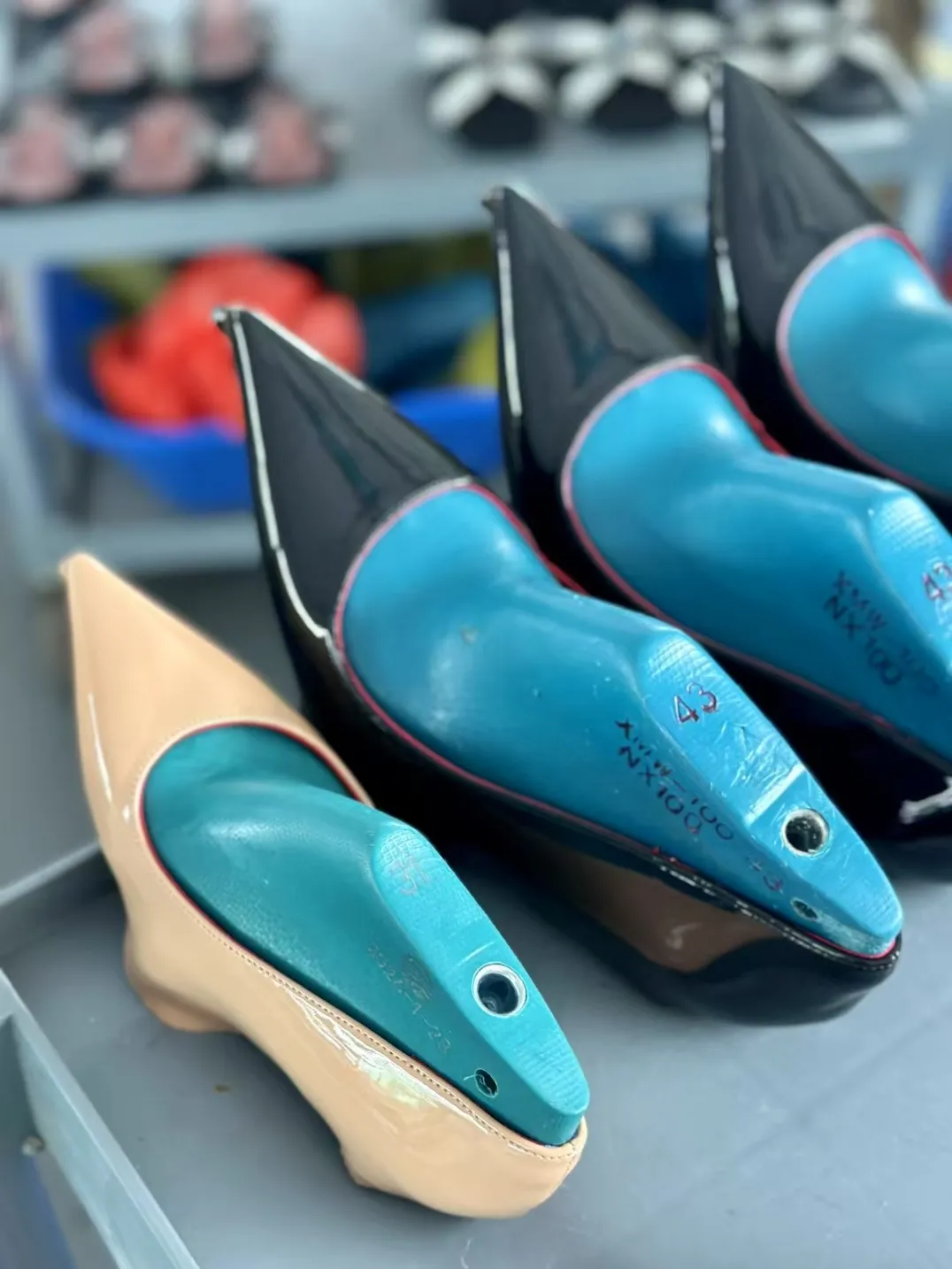
Material selection affects appearance, comfort, price, durability and production consistency. Buyers should choose materials according to the shoe category, target customer and intended retail position rather than appearance alone.
What should buyers consider first?
Before selecting a material, define the target retail price, intended market and season, expected wear conditions, colour and finish, comfort requirements, order quantity and care expectations. The same material may perform differently on a structured loafer, a soft flat or a high-heel sandal.
Upper materials for women’s footwear
Leather
Leather can provide a premium appearance and adapt to the shape of the foot. Natural variation should be expected, so buyers need clear standards for grain, shade and acceptable surface marks.
Synthetic materials
PU and other synthetic uppers offer a broad range of colours, textures and price points. Buyers should compare flexibility, recovery, surface durability, backing and odour rather than choosing from a small cutting alone.
Textile and special finishes
Satin, mesh, velvet, glitter and metallic finishes can create distinctive women’s footwear, but may require extra attention during cutting, stitching, lasting and packing. Ask how the material responds to abrasion, adhesive and pressure.
Linings and sock materials
The lining affects how the shoe feels against the foot. Evaluate softness, breathability, colour transfer and seam placement. For open women’s sandals, visible lining edges should also be treated as part of the design.
Outsole selection
Outsoles should be chosen according to silhouette, flexibility, grip, weight and heel structure. A thin outsole may support an elegant profile, while a more flexible or textured outsole may better suit everyday flats and loafers. Confirm outsole colour, logo, finish and attachment method during sampling.
Heel materials and construction
For high heels, review heel height and shape, covering material, top-piece grip, attachment, stability and balance on a level surface. A visually attractive heel must also work correctly with the last, outsole and upper construction.
How should materials be approved?
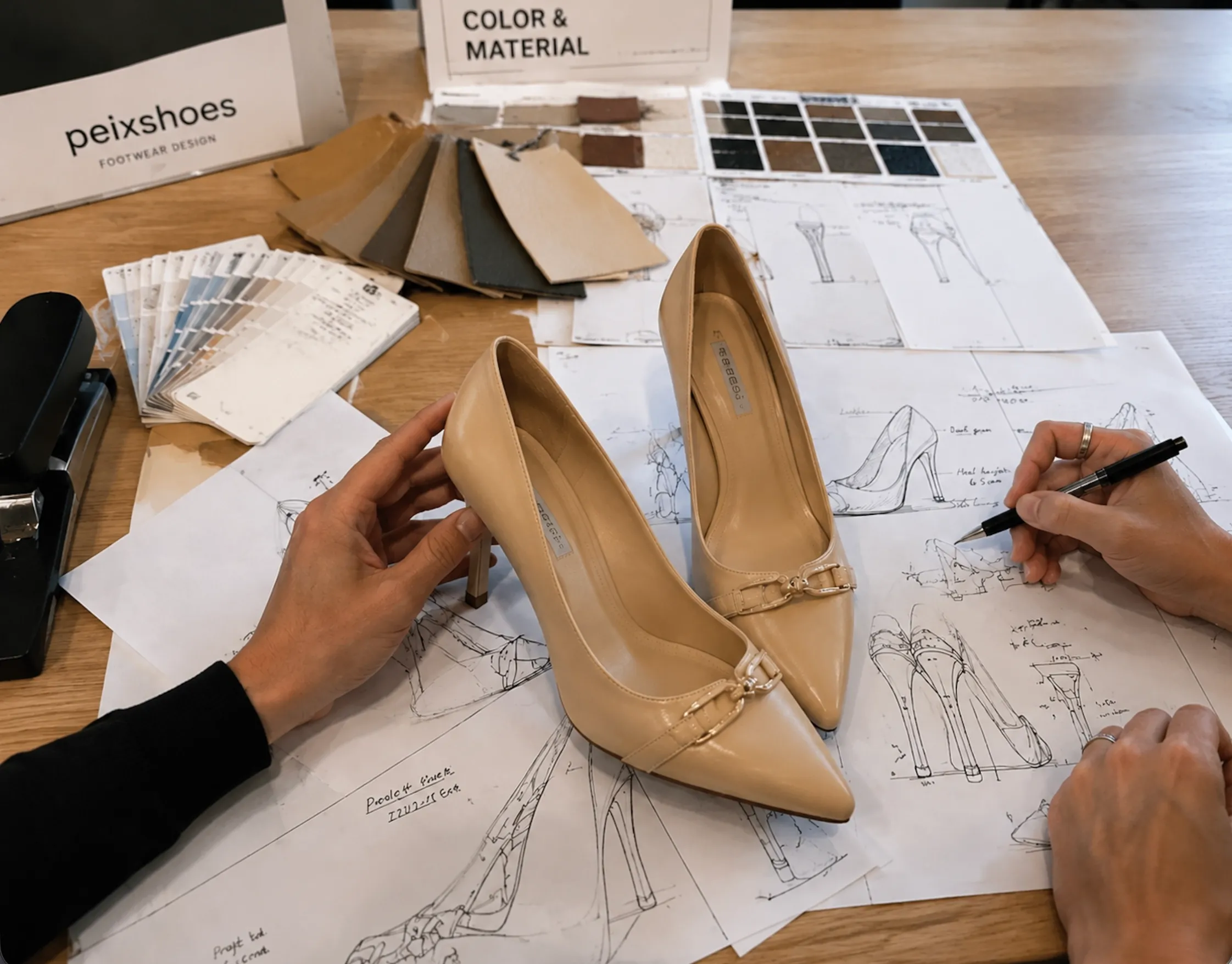
Do not approve materials only from digital photographs. Request physical swatches or include final materials in the development sample. At Peix Shoes, a custom-development sample costs US$100 and the fee can be refunded or credited after a bulk order. A first sample takes about 10 days when the design brief is complete.
Material questions for an RFQ
- Is the material available for the planned quantity?
- Does it have a colour or purchasing minimum?
- How much shade variation should be expected?
- Is the material suitable for the selected construction?
- What alternative can be used if it becomes unavailable?
- Will a material change affect fit or sample approval?
- How should it be packed and stored?
Explore heels, sandals, flats and loafers at https://peixshoes.com/products, review private-label development at https://peixshoes.com/custom-development, or send your material references at https://peixshoes.com/contact-us.