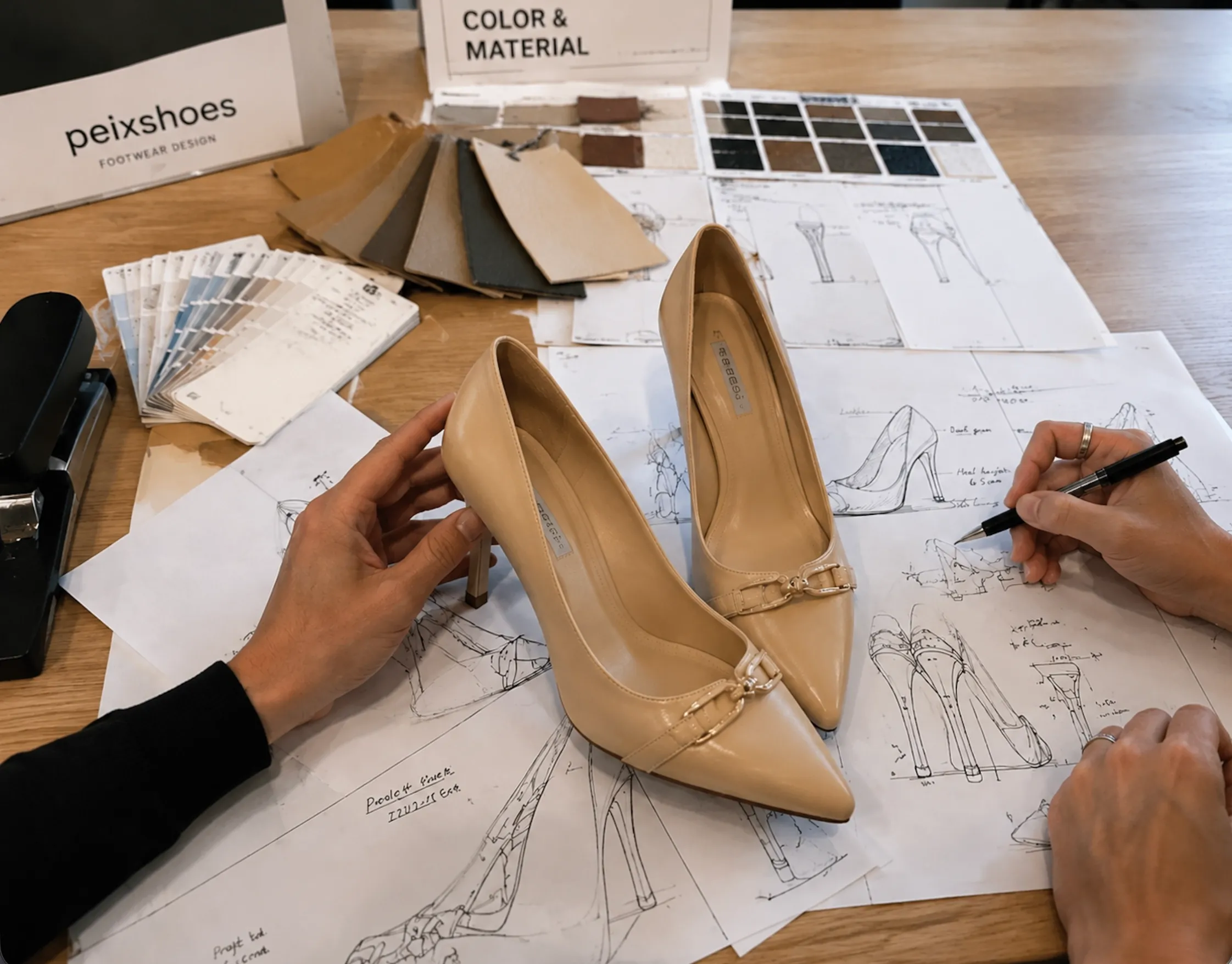
Women's Shoe Fit Testing: A Buyer Protocol for Heels, Flats and Loafers
A practical fit-testing protocol for buyers evaluating women's heels, high-heel sandals, flats and loafers before production.
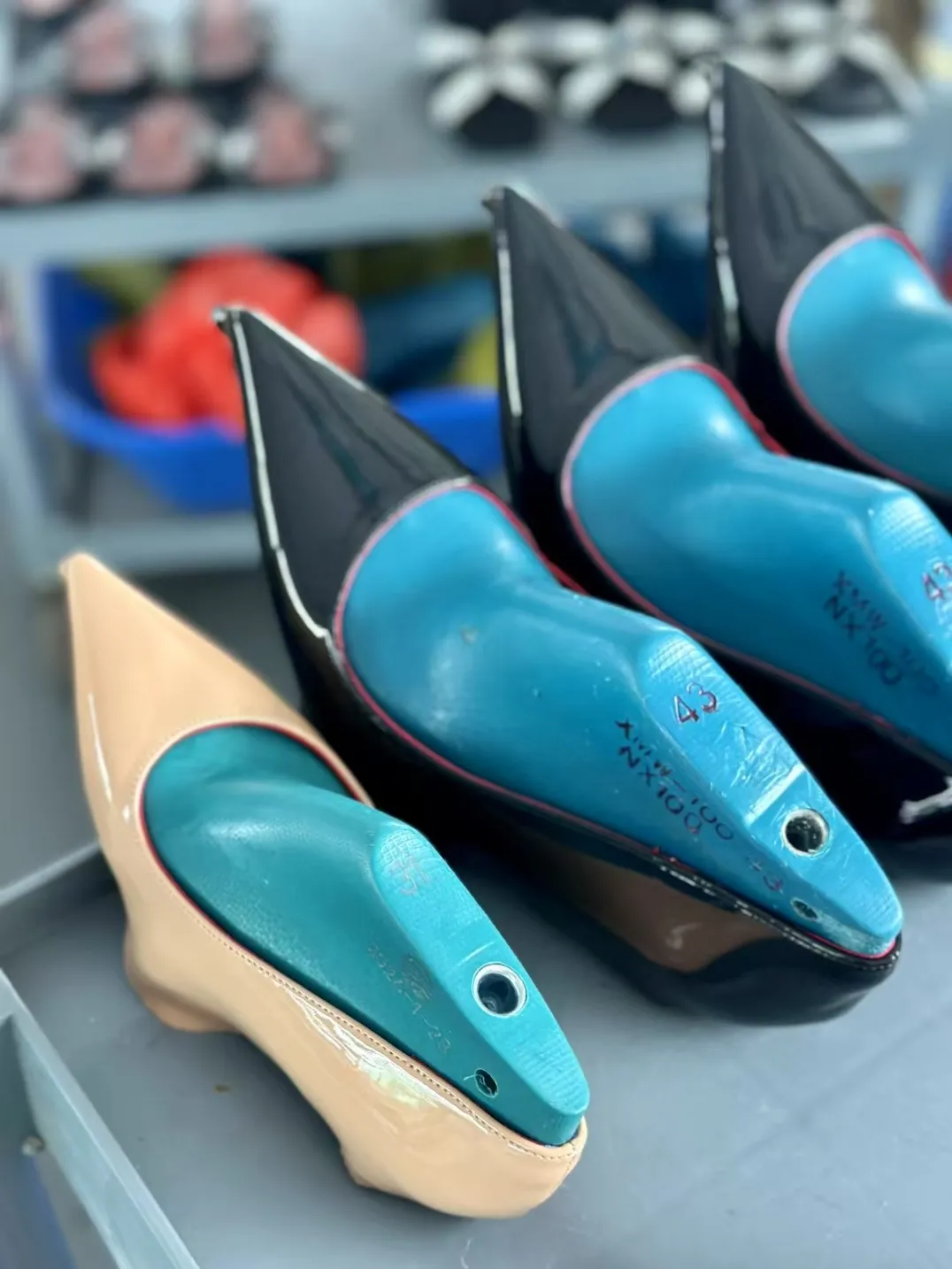
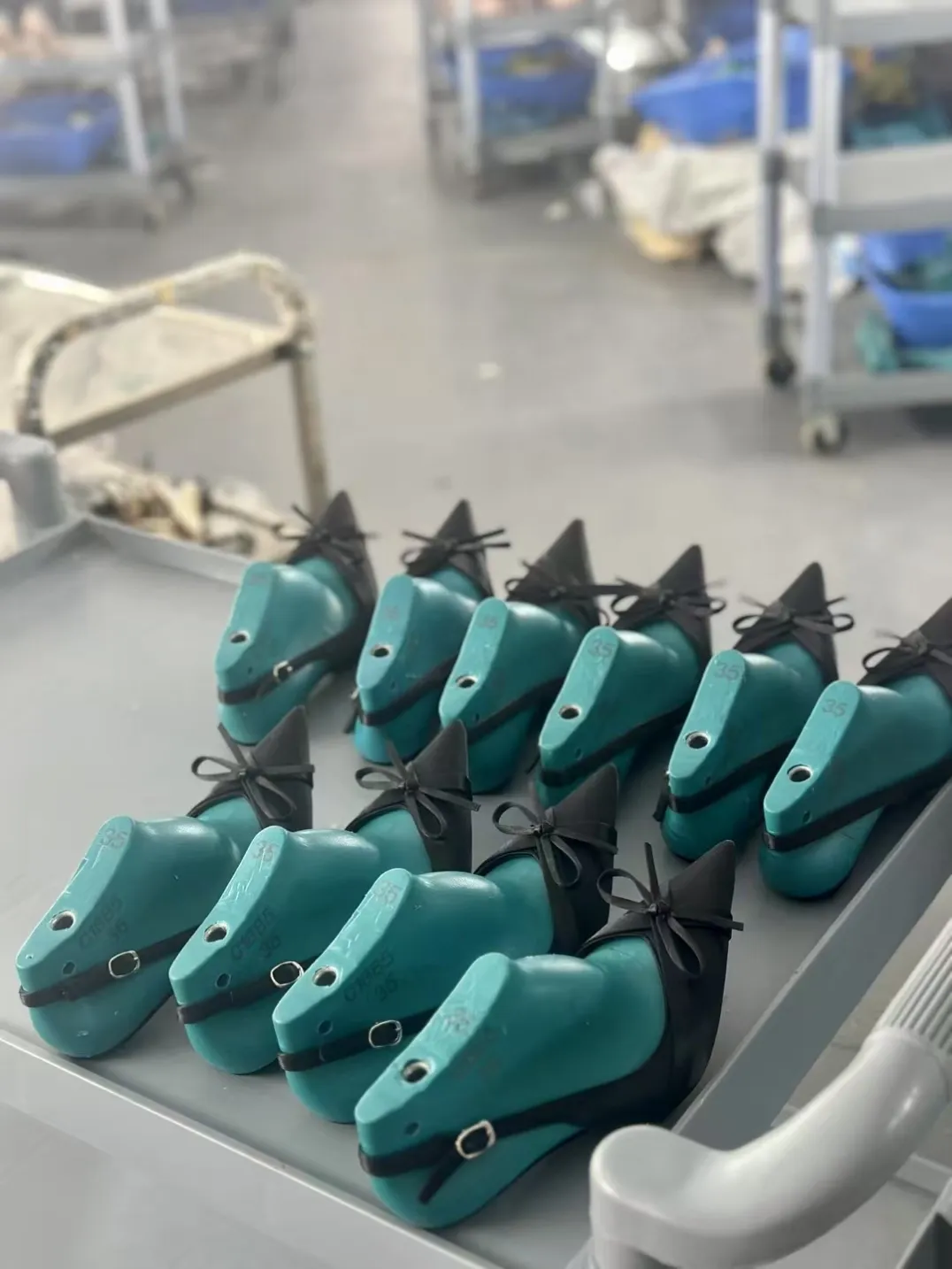
A visually attractive women's shoe can still fail commercially if the fit is unstable, restrictive or inconsistent. Buyers therefore need a repeatable fit-testing protocol, not a single opinion from one wearer.
The correct test changes with the construction. A pump must hold the heel while managing forefoot pressure. A high-heel sandal must control foot slide. A flat needs secure topline contact without cutting the foot. A loafer must balance instep hold with easy entry.
Start with a controlled test record
For every wearer, record foot length, ball girth, usual size, foot-width profile and the size tested. Note the sample version, last reference, upper material, lining, insole and heel height. Without this information, comments cannot be compared across revisions.
Test on a clean, hard floor and include standing, normal walking, turning and stairs where practical. Allow enough time for pressure points and heel movement to appear. Do not rely only on the first few steps.
Fit test for women's pumps and heels
- Heel hold: check whether the counter follows the heel without excessive lifting.
- Forefoot pressure: identify pressure at the ball area and the widest part of the foot.
- Toe position: confirm that the toe shape does not force the foot forward or compress the toes.
- Pitch and balance: the wearer should not feel pushed onto one concentrated point.
- Heel stability: observe wobble, heel-seat contact and outsole contact while walking.
Heel height alone does not determine comfort. Last geometry, heel placement, shank support, padding and toe shape work together.
Fit test for high-heel sandals
Sandals add strap and foot-slide risks. Check whether the forefoot moves beyond the insole edge, whether the toe loop or vamp cuts the foot, and whether the ankle strap holds without relying on the tightest hole.
Mark the strap position and hole spacing on the approval record. A few millimetres can change security and pressure. Also check whether buckles, ornaments and seams contact the foot during walking.
Fit test for women's flats
Flats often fail through heel slip, topline pressure or insufficient structure. Check whether the shoe stays on during a normal stride without curling the toes. Inspect the heel counter, topline height and forepart flex point.
A flat that feels soft in the hand is not automatically comfortable. Poor forefoot flex placement or a rigid edge can create discomfort after repeated steps.
Fit test for women's loafers
The instep is central to loafer fit. If the vamp is too loose, the heel may lift. If it is too tight, entry becomes difficult and pressure develops across the top of the foot. Check the throat opening, vamp depth, instep circumference and heel counter together.
Test with the sock or hosiery expected in the target market. The same loafer can fit differently when worn barefoot.
Separate preference from a repeatable defect
Use a simple rating for heel hold, toe room, width, instep, stability and pressure points. Record whether an observation appears on one wearer or several. Repeated heel slip at the same location is stronger evidence than a general comment such as “not comfortable.”
Photographs or short videos can help a supplier see foot slide, gaping or strap position, but protect the wearer's identity when sharing files.
Test edge sizes after grading
Approval of the base size does not prove the full range. Review a smaller and larger size to confirm that length, width, strap position, topline and decorative details grade correctly. Fixed components require particular attention because their placement may not scale automatically.
Set a decision rule
Before testing, define what requires correction, retesting or rejection. Critical issues include unstable heel contact, severe pressure, unsafe foot slide, inconsistent pair fit and measurements outside the approved range. Cosmetic preferences can be reviewed separately.
Frequently asked questions
How many people should test a women's shoe sample?
There is no universal number. One wearer is rarely enough. Use several suitable wearers around the base size and add edge-size checks when approving the graded range.
Can fit be approved from measurements alone?
No. Measurements provide control points, but walking behaviour, pressure and heel movement require a wear test.
Should every style use the same fit test?
No. Keep a consistent record format, but adapt the checks to pumps, sandals, flats or loafers and their intended use.
Prepare a clearer development brief
Send your target market, size range, reference style and known fit concerns through the Peix Shoes project inquiry form for an initial development discussion.