Footwear Import Compliance Documents: What Women's Shoe Buyers Should Confirm Early
A planning checklist for importers aligning footwear materials, labelling, testing and shipping documents with destination-market requirements.
Footwear compliance problems often begin before production, when the destination market, material description or labelling requirement has not been defined. A supplier can provide product and shipment information, but the importer remains responsible for confirming the legal requirements that apply in the selling market.
Start with the destination and sales channel
Requirements can differ by country, product construction and retailer. Tell the supplier where the shoes will be sold, whether they are heels, sandals, flats or loafers, and which materials and components are planned. Marketplace rules and retailer manuals may add requirements beyond customs clearance.
Build a document map before sampling
- Commercial description, style number, quantity and value.
- Material composition information for the upper, lining, sock and outsole.
- Country-of-origin marking and any required product labels.
- Packing list, invoice and transport documents.
- Testing scope or declarations required by the destination or buyer.
- Approved artwork, barcode data and carton marks.
The exact document name and test method must be verified for the market. Do not ask a supplier to invent a certificate or reuse a report from a different material, colour or style.
Connect compliance to change control
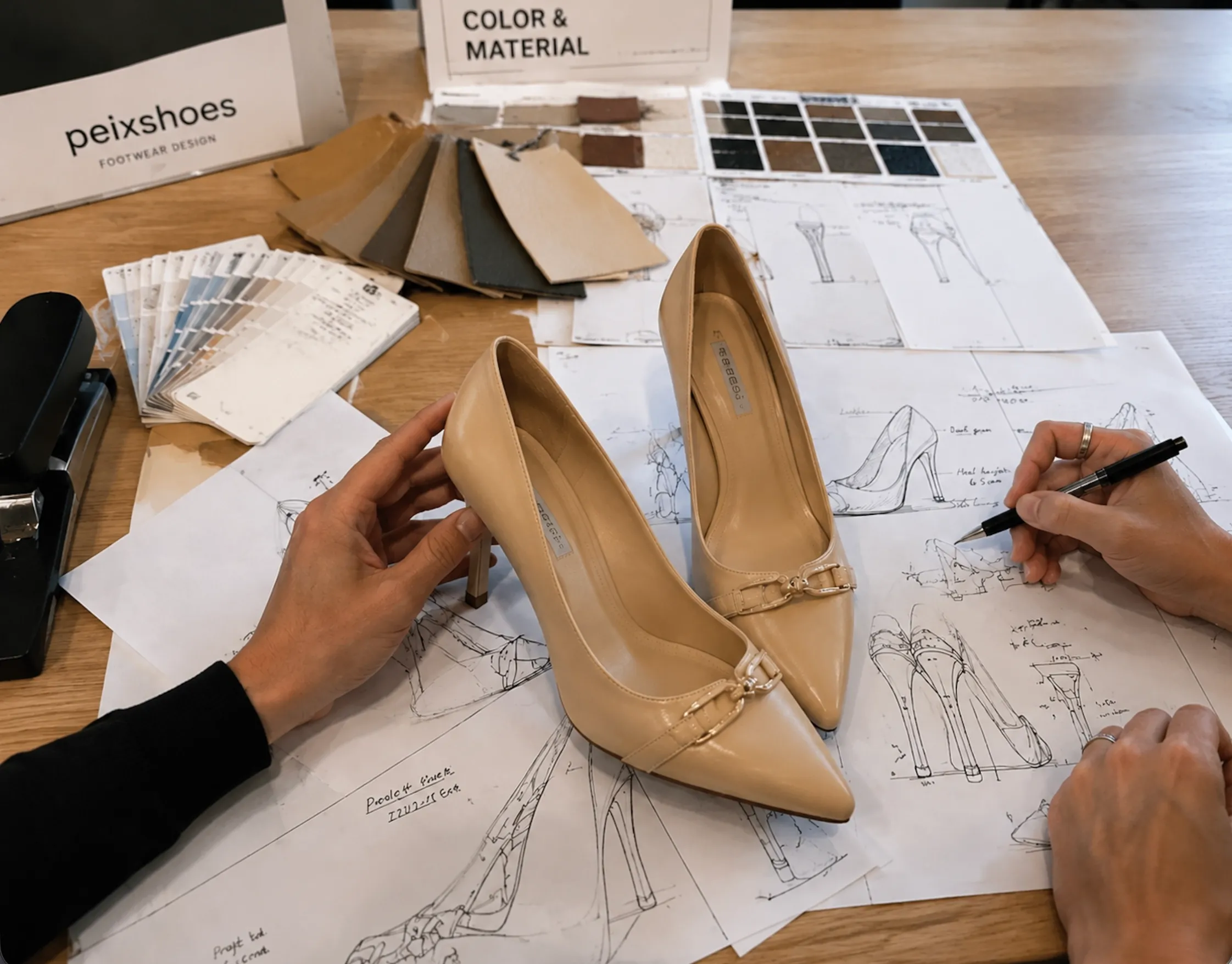
A late material substitution can make an earlier test or declaration irrelevant. Record the approved material supplier, colour, finish and component version. If anything changes, ask whether labels, tests or documents must be updated before production continues.
Keep commercial and technical descriptions consistent
Inconsistent material wording between the quotation, invoice, packing list and product label can delay clearance. Align the product brief through Peix Shoes custom development and review the relevant women's footwear categories before documentation is finalised.
Vera's practical judgment
I would pause production when the buyer says only “standard export documents” but has not named the destination requirements. The useful question is not whether the supplier is compliant in general; it is whether the exact style, material, label and document set meets the rules for the intended market.
FAQ
Can Peix Shoes give legal compliance advice?
Product information and manufacturing documents can support the process, but buyers should confirm legal and customs requirements with qualified local professionals.
When should testing be planned?
Before bulk materials are locked, so the tested construction matches the production order.
Can one report cover every colour?
Not automatically. Coverage depends on the material, colour, test scope and destination requirement.
Next step
Send the destination market and compliance checklist with your reference style so the required product information can be reviewed early.