What Makes a High Heel Comfortable? 9 Specifications Buyers Should Define Before Sampling
Learn how heel height, pitch, toe shape, shank, heel seat, cushioning and fit affect comfort before developing private-label women’s heels.
Short answer: a comfortable high heel is not created by adding a soft insole at the end. Comfort depends on the last, heel height, pitch, toe shape, heel position, shank support, upper hold and size grading working together. Buyers should define these points before the first sample, then confirm them through fit and wear testing.
For importers, retailers and private-label brands, the useful question is not simply "Is this heel comfortable?" It is: "Which construction choices will make this style stable and wearable for our target customer?"
Comfort is a system, not one component
Google searches often focus on heel height or cushioning, but neither factor works alone. A moderate heel can still feel unstable when the heel seat is misplaced. A padded sock can still feel painful when the toe box compresses the forefoot. The specification must treat the shoe as one system.
Vera's practical judgment: I first check whether the foot is held in the correct position and whether the heel sits under the load path. If the foot slides forward or the rearfoot feels unstable, extra padding will not solve the underlying problem.
9 specifications to define before sampling
1. Heel height and intended wear time
State the measured heel height, the measurement method and the intended use. A work heel, occasion sandal and fashion statement style have different wear expectations. There is no universal "comfortable" height; the right range depends on the last, construction and target customer.
2. Pitch and foot position
Pitch describes how steeply the foot sits from heel to forefoot. The buyer should review pitch together with heel height and platform thickness. An unbalanced pitch can push excessive pressure forward even when the heel height looks acceptable.
3. Toe shape and usable toe-box space
Pointed, square and almond toes can all work, but the internal space must match the target fit. Confirm forefoot width, toe depth and how the shape grades across sizes. The visible toe shape should not be confused with the usable space inside the shoe.
4. Heel seat and heel position
The heel must be positioned to support the wearer rather than merely match the sketch. During sample review, check the shoe from the side and rear, place it on a flat surface and assess whether the heel stands cleanly without rocking.
5. Heel base and stability
A wider heel base usually gives more contact with the ground, but stability also depends on heel attachment, alignment and material. For slim heels, buyers should pay particular attention to wobble, rear alignment and the security of the heel fixing.
6. Shank and midfoot support
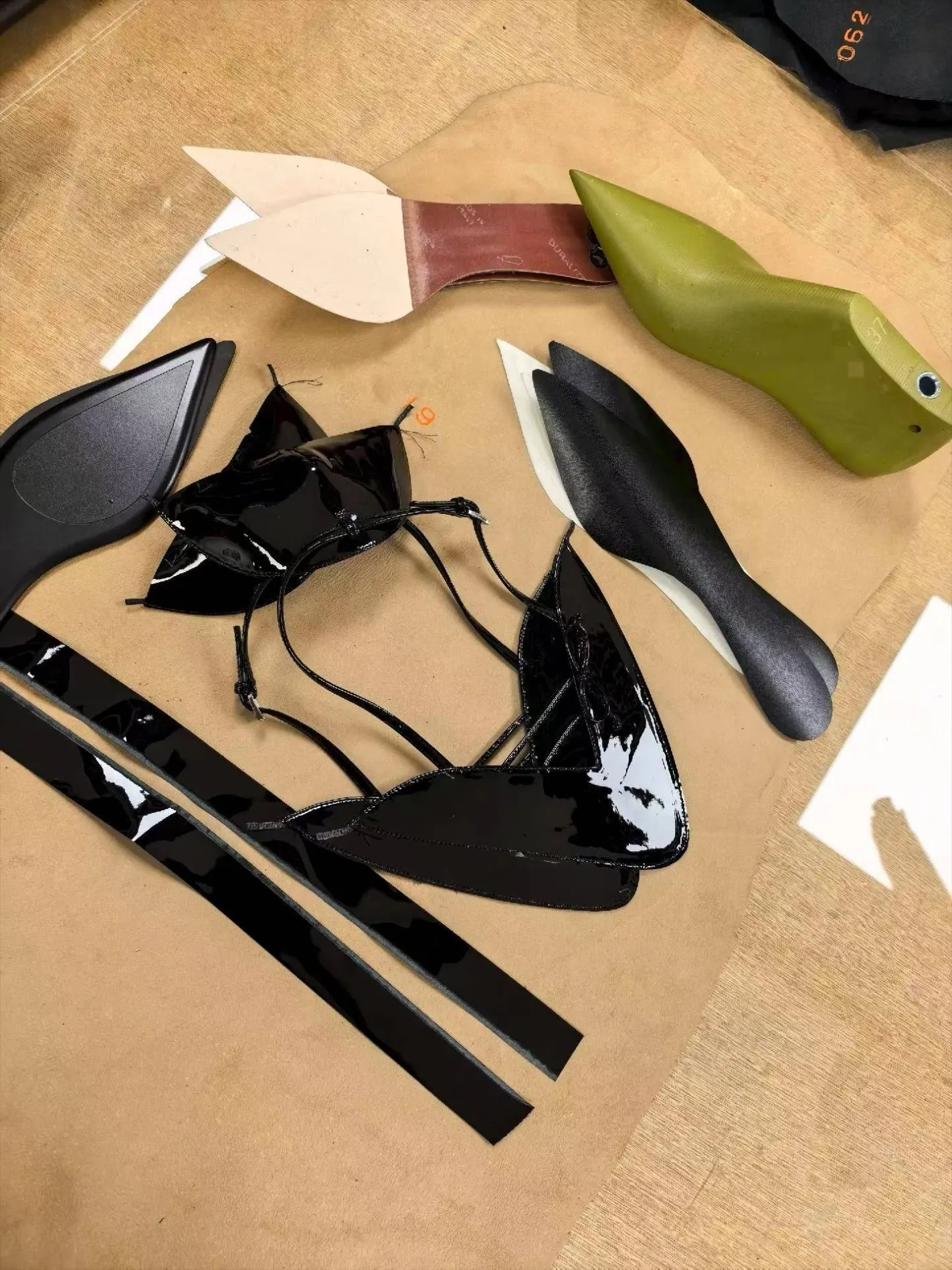
The shank helps resist unwanted flex through the arch area. Its specification must suit the heel height and construction. During testing, compare left and right shoes and check that flex occurs in the intended forefoot area rather than through the midfoot.
7. Insole shape, cushioning and lining
Cushioning should be placed where pressure occurs, not used as a generic thickness increase. Review heel cup shape, forefoot padding, arch contour, lining seams and moisture management. Excessive soft foam may compress quickly and change the fit.
8. Upper hold, topline and straps
The upper must keep the foot from sliding forward or lifting at the heel. For pumps, check topline tension and heel grip. For high-heel sandals, confirm strap position, edge softness, buckle placement and whether the foot remains centered while walking.
9. Outsole contact, toe spring and slip resistance
Check how the forepart contacts the floor, whether toe spring supports a natural step and whether the outsole material suits the intended environment. Slip resistance should be evaluated on relevant surfaces rather than assumed from tread appearance alone.
What should buyers ask the supplier to record?
- Approved last reference and target market
- Heel height and platform measurements
- Key fitting measurements and size range
- Heel, shank, insole, lining and outsole specifications
- Fit comments and revisions for each sample round
- Wear-test conditions and tester feedback
- Final approved sample and production tolerances
These details belong in the footwear tech pack and sample approval record. Review the Peix Shoes custom-development process to see how a buyer brief moves through sampling and confirmation.
How to test a high-heel sample
Use more than a quick standing test. Ask a suitable fit wearer to walk, turn, use stairs if relevant and remain in the shoe long enough to identify pressure, slipping or instability. Record the size tested, foot characteristics, wear duration and exact problem location. Repeat after revisions instead of relying on memory.
Do not approve bulk production because the sample looks correct in photographs. If the foot slides forward, the heel rocks, the topline gaps or the pressure point cannot be explained, the sample needs another review.
Frequently asked buyer questions
Does a lower heel automatically mean better comfort?
No. Lower height may reduce pitch, but poor fit, weak support or an unstable heel position can still create discomfort.
Can thicker cushioning fix an uncomfortable sample?
Only when cushioning addresses a verified pressure area without making the shoe too tight. It cannot correct an unsuitable last, excessive forward slide or unstable construction.
Should every market use the same last?
Not automatically. Target-market fit expectations, size standards and customer feedback should be reviewed before confirming the last and grading plan.
When should a buyer reject the sample?
Do not move to bulk production while there is unexplained rocking, heel movement, concentrated pain, inconsistent left-right fit or a construction change that has not been wear tested.
You can review current women’s heel and sandal references in the Peix Shoes product collection.
Planning a private-label heel? Send Peix Shoes your reference image, target heel height, size range and market so the first development discussion starts with a clear comfort brief.